The above clip may be one of the first places I ever heard the word “epiphany.” To be fair, it’s not exactly a word young kid would be using all the time, but I digress…
The Story of the Magi & the Feast of the Epiphany
The Feast of the Epiphany (January 6) occurs 12 days after Christmas (yes, those 12 days are of Christmas!) and recalls how the magi set out from their homes and journeyed to visit the newborn Christ child. We find their story in Matthew 12:1-12:
In the time of King Herod, after Jesus was born in Bethlehem of Judea, magi from the east came to Jerusalem, 2 asking, “Where is the child who has been born king of the Jews? For we observed his star in the east and have come to pay him homage.” 3 When King Herod heard this, he was frightened, and all Jerusalem with him, 4 and calling together all the chief priests and scribes of the people, he inquired of them where the Messiah was to be born. 5 They told him, “In Bethlehem of Judea, for so it has been written by the prophet:
6 ‘And you, Bethlehem, in the land of Judah,
are by no means least among the rulers of Judah,
for from you shall come a ruler
who is to shepher] my people Israel.’ ”7 Then Herod secretly called for the magi and learned from them the exact time when the star had appeared. 8 Then he sent them to Bethlehem, saying, “Go and search diligently for the child, and when you have found him, bring me word so that I may also go and pay him homage.” 9 When they had heard the king, they set out, and there, ahead of them, went the star that they had seen in the east, until it stopped over the place where the child was. 10 When they saw that the star had stopped, they were overwhelmed with joy. 11 On entering the house, they saw the child with Mary his mother, and they knelt down and paid him homage. Then, opening their treasure chests, they offered him gifts of gold, frankincense, and myrrh. 12 And having been warned in a dream not to return to Herod, they left for their own country by another road.
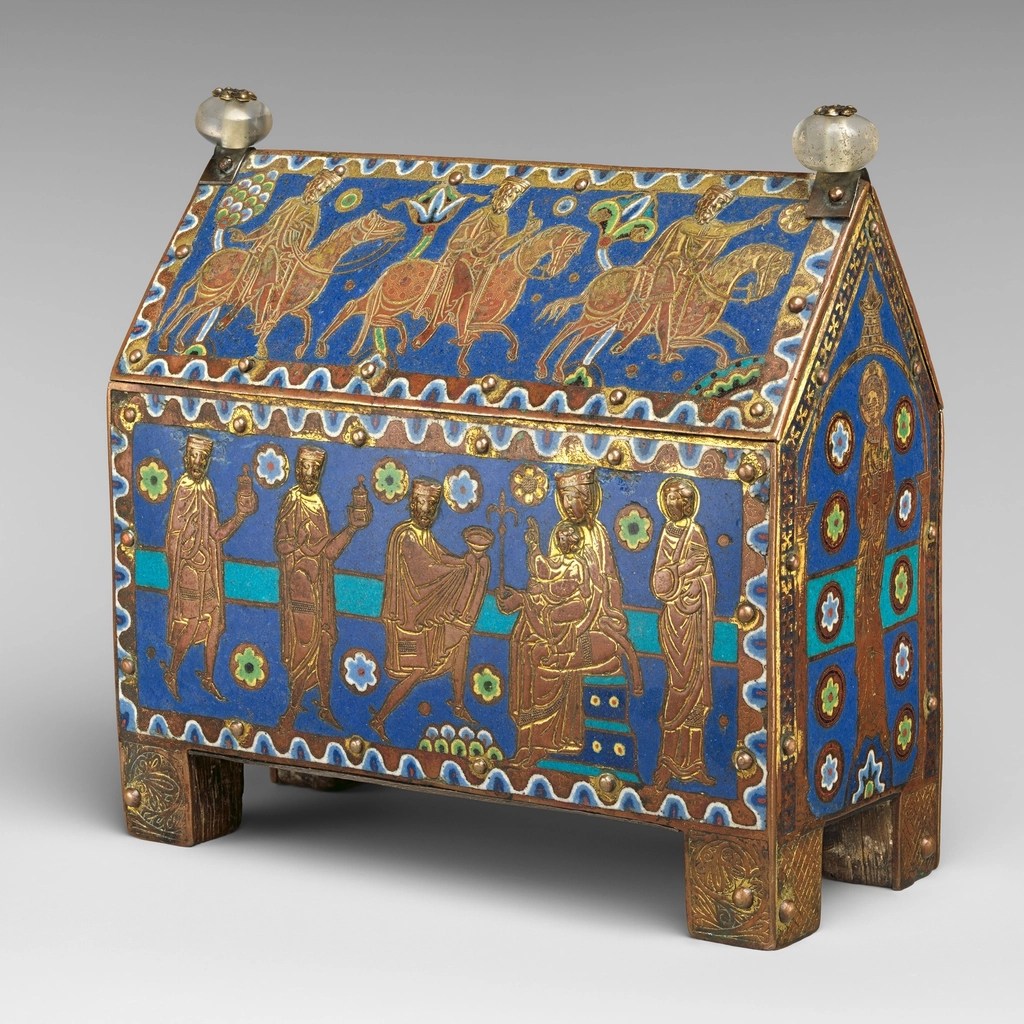
Typically, in Christmas pageants and carols, these magi are depicted as “wise men,” three in number and laden with costly gifts. In fact, it is from the gifts of gold, frankincense, and myrrh, that people have surmised there must have been three magi. After all, you couldn’t have a fourth who didn’t have an extra gift could you?!
They have also been depicted as three kings, traveling to pay homage to a new king who has been born. Scholars believe they were astrologers and/or even Zoroastrian priests – practitioners of an ancient Persian religion. But beyond the catchy carols and terry cloth-clad children with false beards depicting these figures, they also offer us a great jumping off place for pondering the new year.
The magi serve as archetypes for all who seek; in the church year, the liturgical season of Epiphany celebrates Christ revealed to all nations and peoples. They journey from their homes following the star, are overwhelmed with joy when they reach their destination, worship God, and return home by a different road. This return journey is both an alternate route and a new way of traveling through life – they are changed by their encounter with the living God.
In their travels, I’m sure they encountered all of the usual – packing stress, carrying the provisions needed, stopping to resupply and to rest along the way, meeting other sojourners, wondering if they were going the right direction (star GPS?!), getting on each others’ nerves on a long journey, and facing the dangers of the open road, which was frequently under threat from bandits and wild animals. However, they faced an additional threat: the wiles of King Herod.
According to Matthew 2:13-23, King Herod did not in any way, shape, or form appreciate hearing that a new king had been born within his territory. He was, after all, the king – who might this new upstart be, or more precisely, become? He wants intel from the magi, but they are warned in a dream to avoid returning to Jerusalem and King Herod and, instead, bypass the city, taking another way home. When Herod finds out, he is furious, and because he doesn’t have more specific information to eliminate his perceived rival, he murders all of the children two years old and under in and around Bethlehem. His fragile ego and insecurity lead to the destruction of innocent lives in unsuspecting families. Jesus is spared because Joseph had also been warned in a dream to take his family and flee to Egypt. It’s a terrible and tragic ending to what began as a pilgrimage of wonder, joy, and worship.
Well, this post certainly took a turn…
You may be asking, well, what does that have to do with my life?
Fair enough! As we begin 2025, you are most likely looking ahead and wondering where this year will take you. Perhaps you have some ideas of what you’d like to see or accomplish, maybe even discerned in prayer and thoughtful reflection, such as the process I outlined last week. Or maybe you’re still feeling up in the air about what you’re hoping for this year.
The story of magi provides some helpful guiding questions if that’s where you’re finding yourself:
- What are you seeking in this season of life? What are you hoping to find as you go through the year?
- Where are you journeying from and what are you journeying toward?
- What do you need as you travel?
- How will you find rest along the way when you need it?
- What fears or dangers might you encounter on the road?
- How might you be changed or travel differently after encountering God or after worshiping God?
- What gifts do you have to offer? How might you share these with others? How might this generosity change you and those around you?
- How might your choices reflect a desire to protect the vulnerable?
Spiritual Practice #1: Star Words
If these questions leave you scratching your head, there’s another magi-inspired spiritual practice I’ve found both meaningful and fun over the past few years. This practice is selecting (and passing out!) Star Words. Many times, when we’re at a loss for what we might need or desire in our lives, the Holy Spirit speaks and points the way. Star Words are passed out or selected at random, but we trust that the Spirit is able to speak through these words, often in surprising and unexpected ways.
As the magi followed the radiant star to Bethlehem to visit Jesus, the word we choose or that chooses us at Epiphany serves as a guiding light for the year. It might comfort or encourage, inspire, challenge, or be thought-provoking. It might even frustrate or baffle us. The word is there to serve as a way of checking in with God and ourselves as we make our way through the year, asking if we’re still headed in the right direction or paying attention to what we’ve been invited to notice.
Upon receiving a Star Word, it’s great to look at definitions for it or even use a thesaurus to find synonyms to help you understand the word’s full richness. As you go through the year with your word, the following questions may be helpful.
- What is your relationship to this word? Is it positive or negative? Hopeful or challenging?
- Where are you seeing this word and it’s various forms (noun, verb, adjective, adverb, etc.) pop up in your life?
- What might it teach you?
- What invitation might it offer?
- If the word is frustrating, how might those frustrations call you to sit with God in prayer and spend time pondering why this word is difficult?
If you’d like a word, leave a comment below with a number in it (2-525) and I’ll comment back with your word. And, if you’ve done this before, let me know what words you’ve had and what was helpful. I’d love to hear your thoughts!
Spiritual Practice #2: House Blessing
Since the magi visited the baby Jesus in his home, Epiphany has also become a time of year when homes are blessed and door lintels are chalked, often with the initials of the traditional names of the magi: Caspar, Melchior, and Balthasar. This practice is both a way of giving thanks for our dwellings and those with whom we share space, and a way of preparing our hearts to receive visitors who may come into our homes and lives. It’s a ritual that helps us ponder love and hospitality every time we enter and exit our front door. It also beckons us to consider the way God and God’s messengers show up in our lives.
For more information on what this could look like, check out these simple orders of service from Building Faith and from Holy Trinity Lutheran Church/Augsburg Fortress. To bless your home, you only need to grab a piece of chalk, an order of service, and – to make it more fun – some friends and family!
The story of the magi only appears over the course of a few verses of the Gospel of Matthew, but it provides a fantastic entry point for imagination and dreaming, seeking and questioning in our lives, particularly at the start of a new year.
So may we journey with the magi and find our lives changed along the way!
© Annabelle P. Markey
 Journeying Together
Leave a comment